

AERIAL FIRE FIGHTING
Fire seasons are intensifying worldwide.
Longer, hotter, and more unpredictable fire seasons are placing unprecedented demand on the pilots and aircraft tasked with fighting them. From the western United States to South America, Africa, Australia and Europe, operators are contending with more frequent call-outs, more complex terrain, and increasingly compressed windows to get crews mission-ready. As the scale of the challenge grows, so too does the need for training that can keep pace — without adding further risk to already stretched operations.
Aerial firefighting is inherently dangerous work.
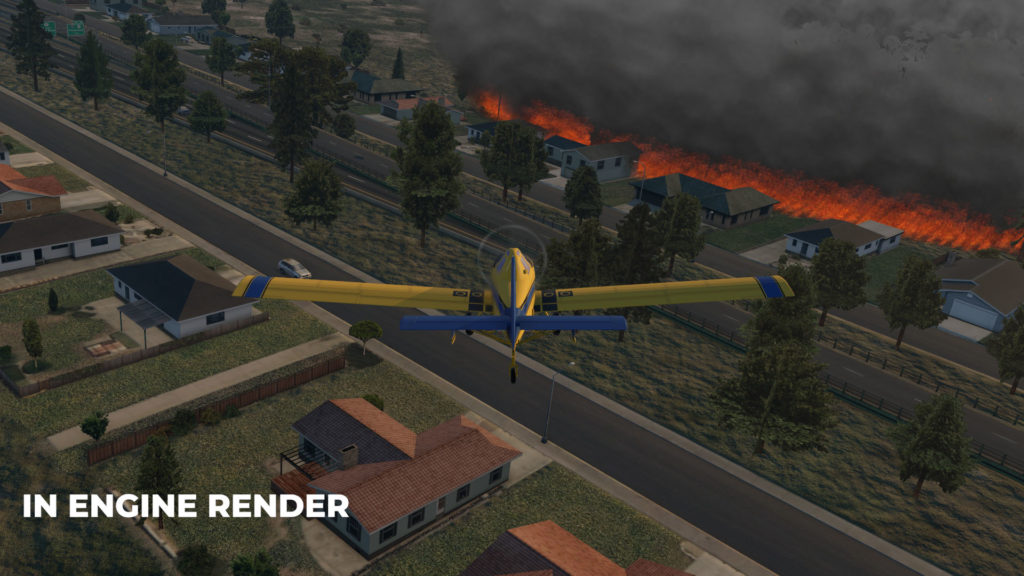
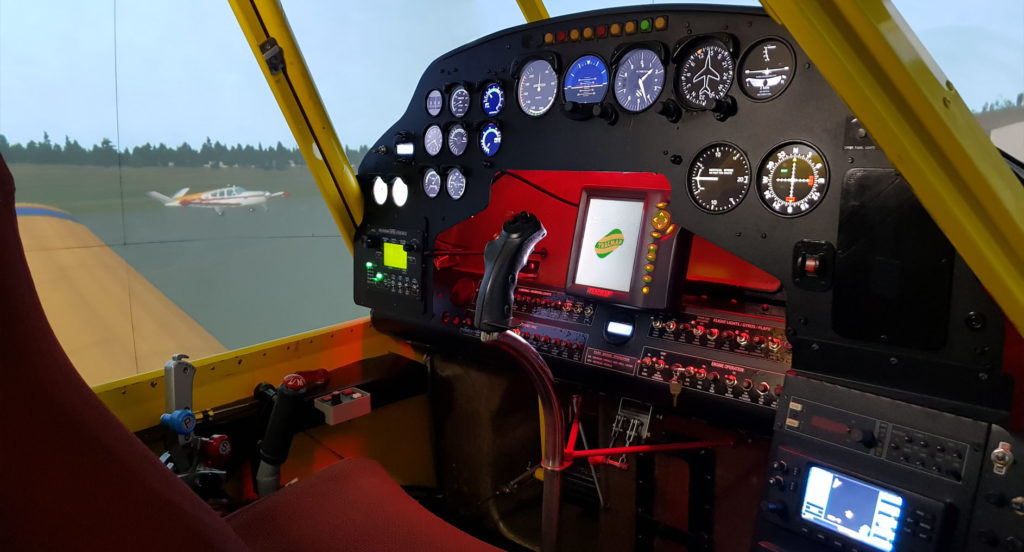
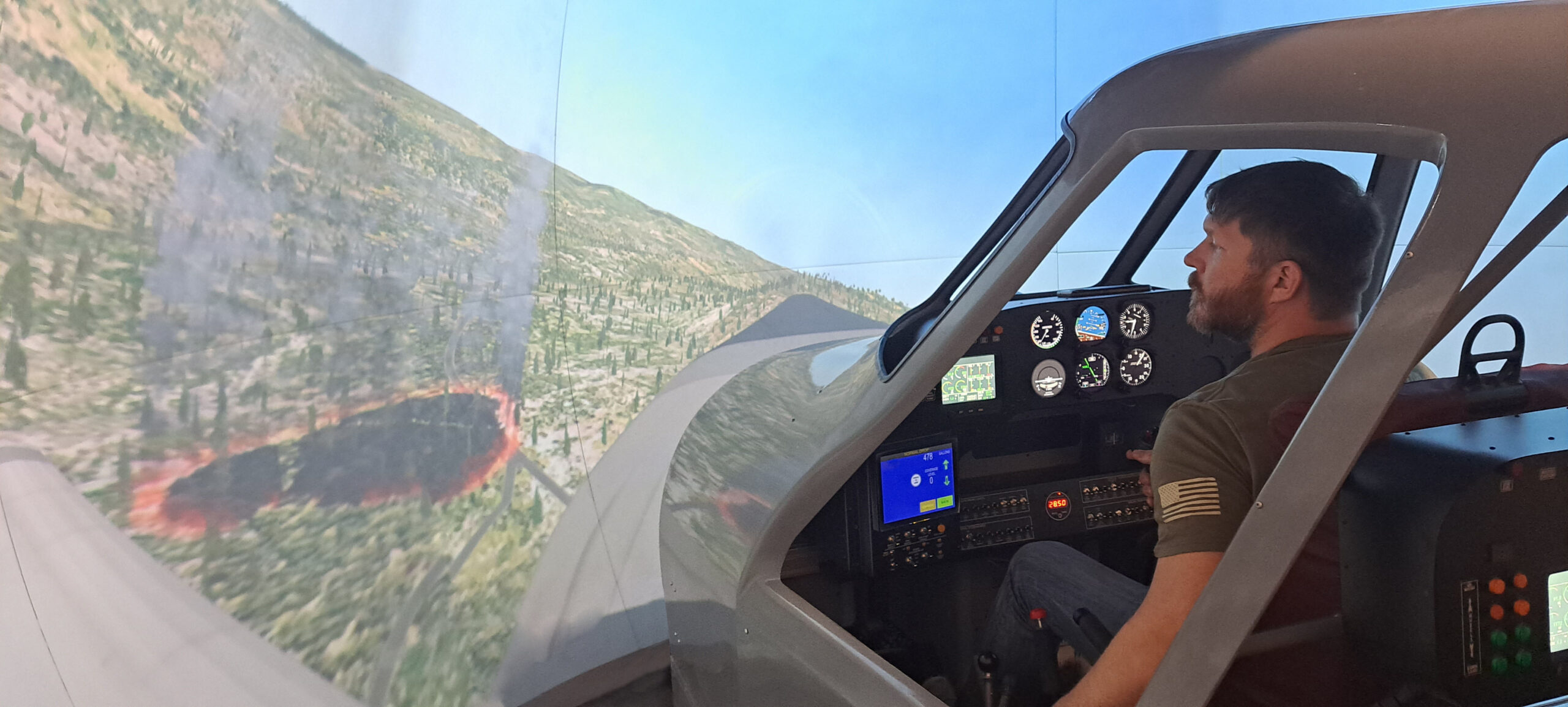
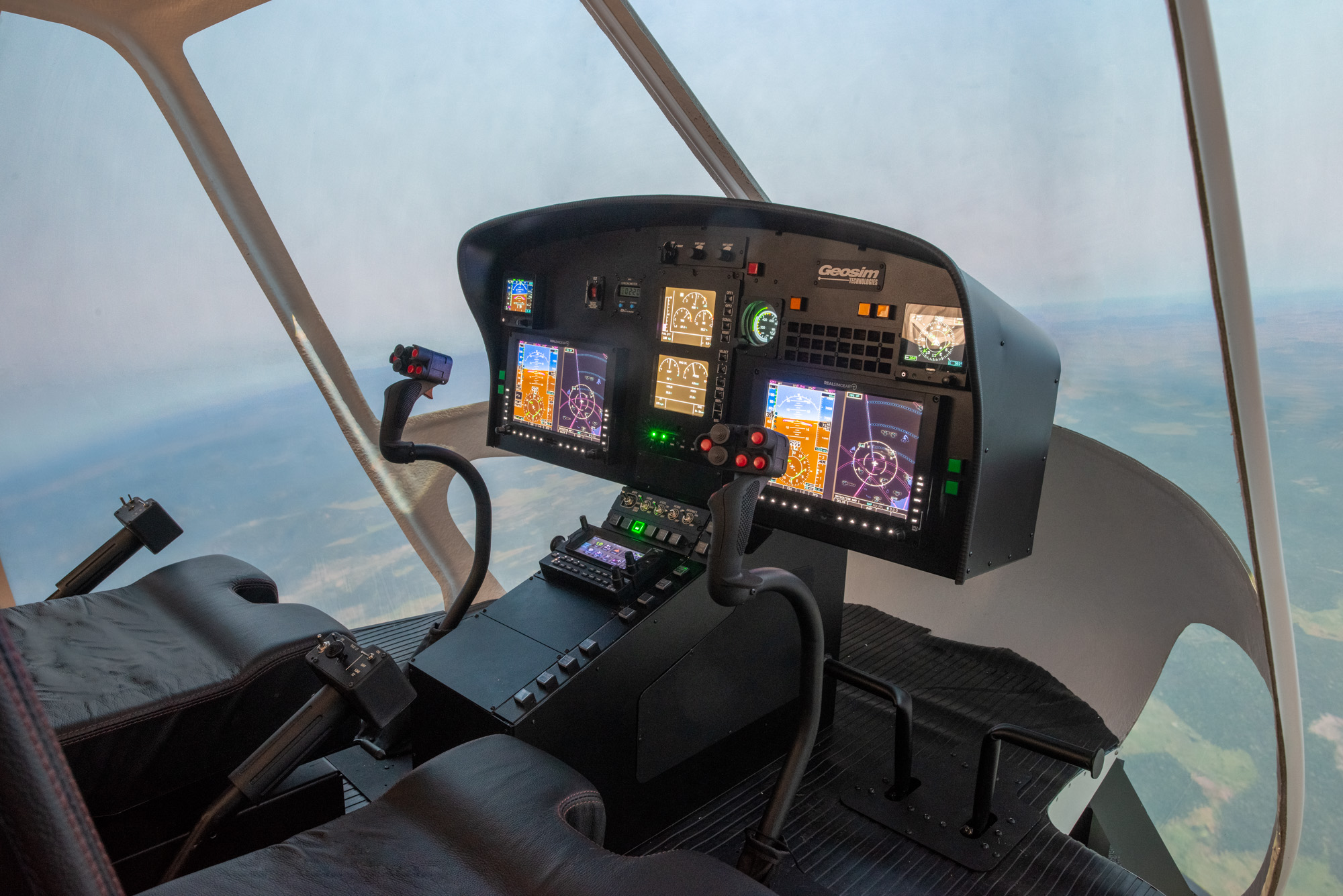
Pilots fly at low level through smoke-obscured terrain, manage heavy loads, and make split-second decisions under extreme operational pressure and all in conditions that are difficult, and often unsafe, to replicate consistently in a live aircraft. GeoSim’s simulators aren’t limited to a single airframe or role, our range spans aircraft like the Air Tractor AT-802, AS350 and King Air to name but a few, built to support the full spectrum of firefighting operations including air attack, SEATs, reconnaissance and support roles. Pilots can rehearse low-level operations, precision retardant drops, emergency procedures and smoke-obscured approaches in a controlled environment, again and again, until the response becomes second nature.
Simulation doesn’t just protect people, it protects equipment and improves outcomes.
By shifting high-risk training scenarios out of the cockpit and into simulation, operators reduce wear on live aircraft, lower operating costs, and standardise training across their pilot groups. The result is a workforce that arrives at each fire season better prepared, more consistent in its procedures, and more capable of protecting lives, aircraft and communities when it matters most. As fire risk continues to grow globally, simulation is fast becoming not just a training advantage, but an operational necessity.
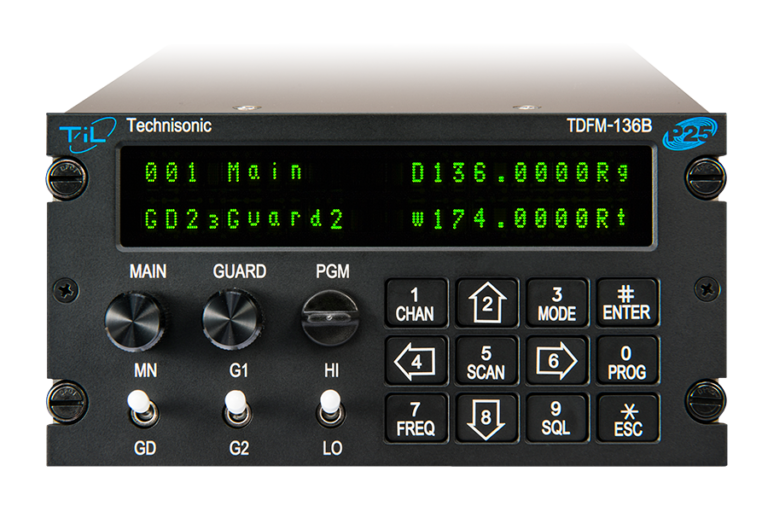
Effective communication can be the difference between a well-executed mission and a critical failure.
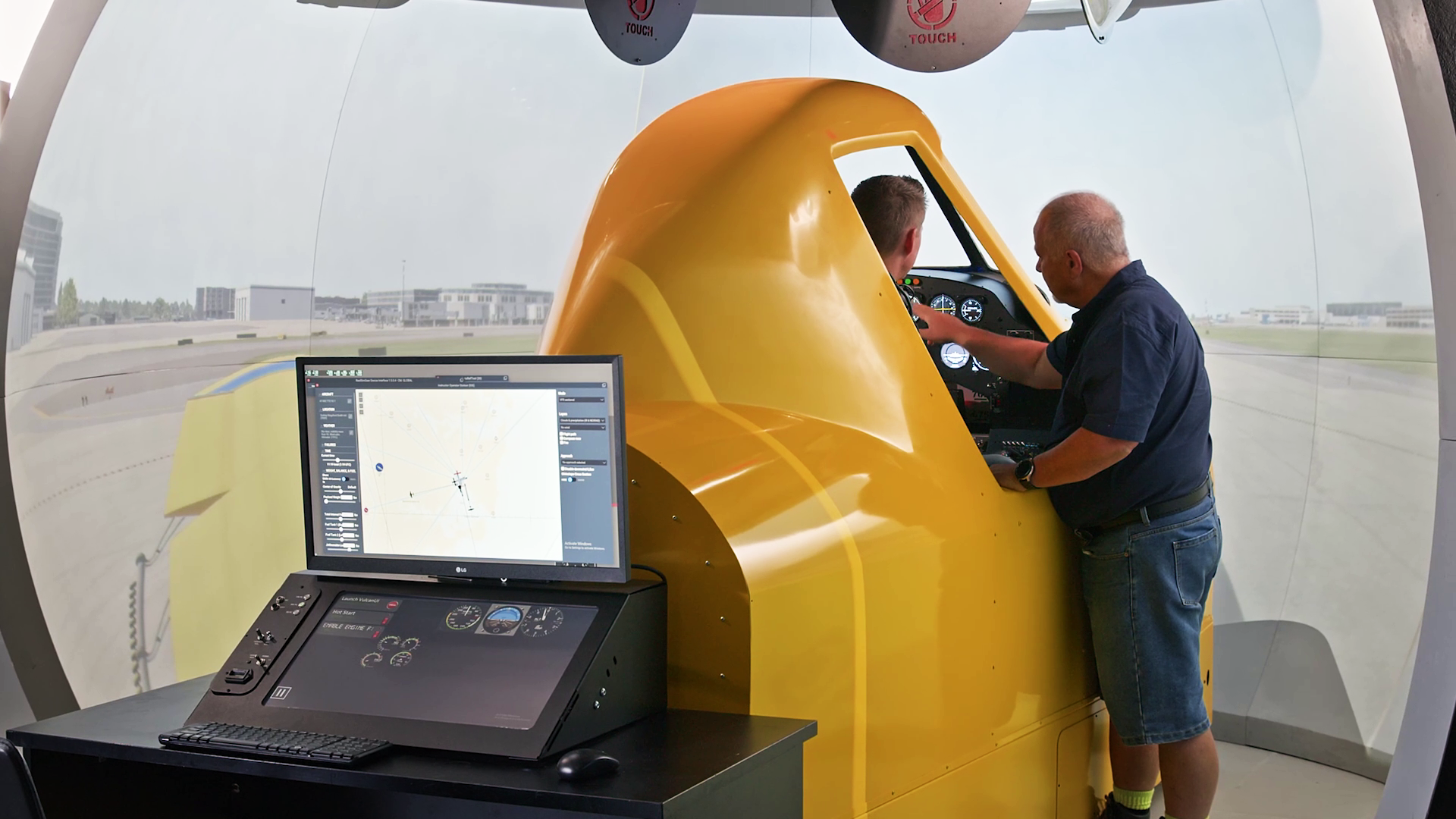
In aerial firefighting, pilots must coordinate constantly with air attack supervisors, ground crews, other aircraft in the airspace, and local emergency authorities, all while managing the demands of low-level flight through smoke and shifting conditions. This challenge is compounded by the international nature of the industry, where pilots frequently deploy to work alongside local authorities and unfamiliar radio protocols in unfamiliar regions. GeoSim’s custom solutions, including simulated Technisonics units and full radio communications training, allow these procedures to be practised and refined in a controlled environment — so that communication breakdowns are identified and ironed out during training, long before they can become serious issues in the real world. A key advantage of GeoSim’s simulators that builds on this is the ability to connect them over the internet and intranet, allowing crews to rehearse this exact kind of complex multi-aircraft coordination; from fire control airspace to formation flying.
Vulcan powers every GeoSim firefighting simulator.
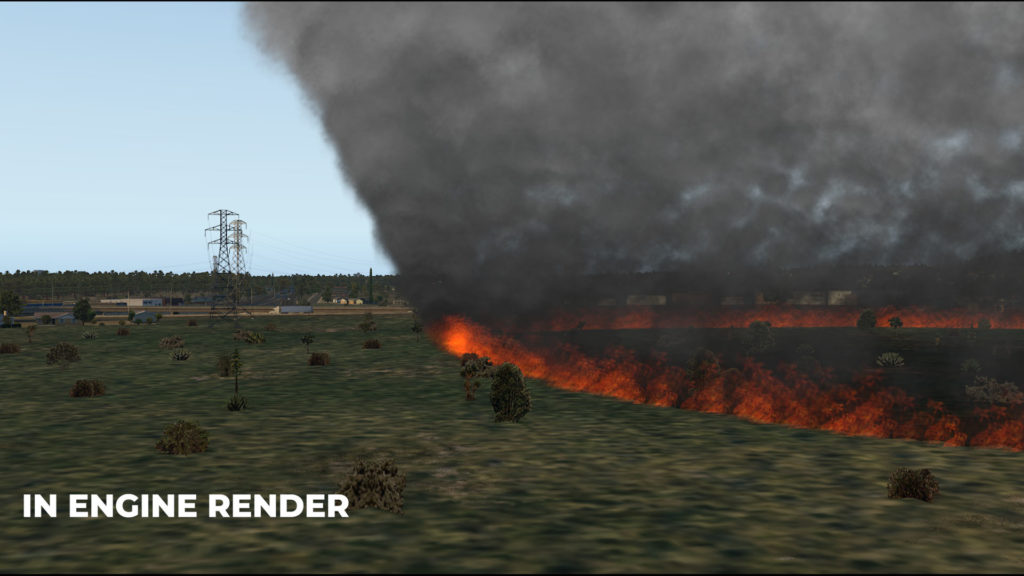
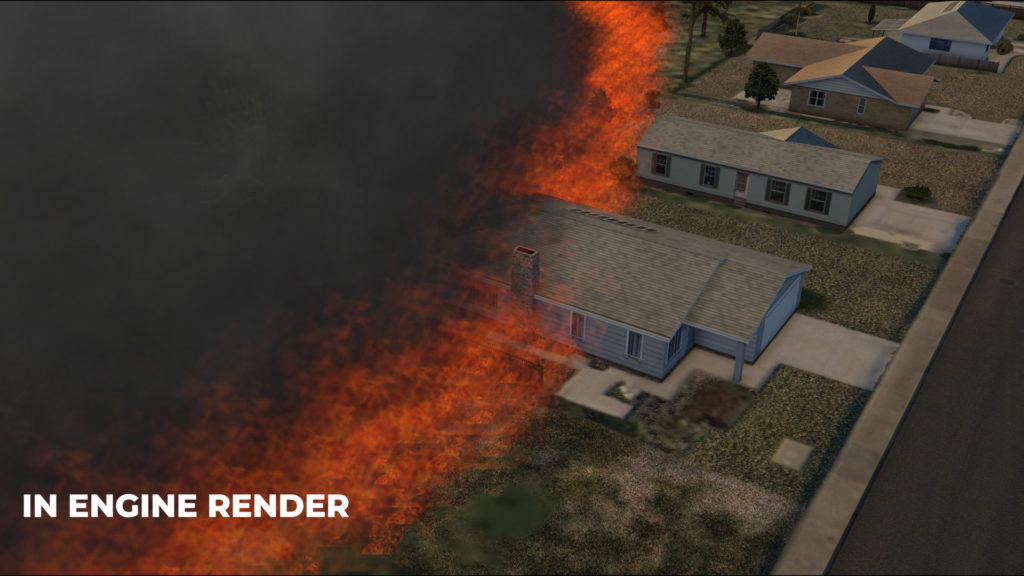
At the core of every GeoSim Aerial Fire Fighting simulator is Vulcan, which combines two critical systems: a dynamic fire simulation engine that reacts to wind, temperature, time and fuel type, complete with custom payloads and realistic drop effectiveness, alongside a dedicated communications system for training coordination between pilots, fire crews and organisations. Together, these allow crews to rehearse adverse conditions and simulate emergency scenarios that would be fatal to get wrong in the real world — all without risk to aircraft or personnel. Because while the loss of an aircraft is costly, it is nothing compared to the value of a human life, which is why GeoSim continues to invest heavily in Vulcan’s development to deliver better training and safer aerial firefighting outcomes.